Bags Under Eyes: Causes, Treatments, and How to Look Less Tired
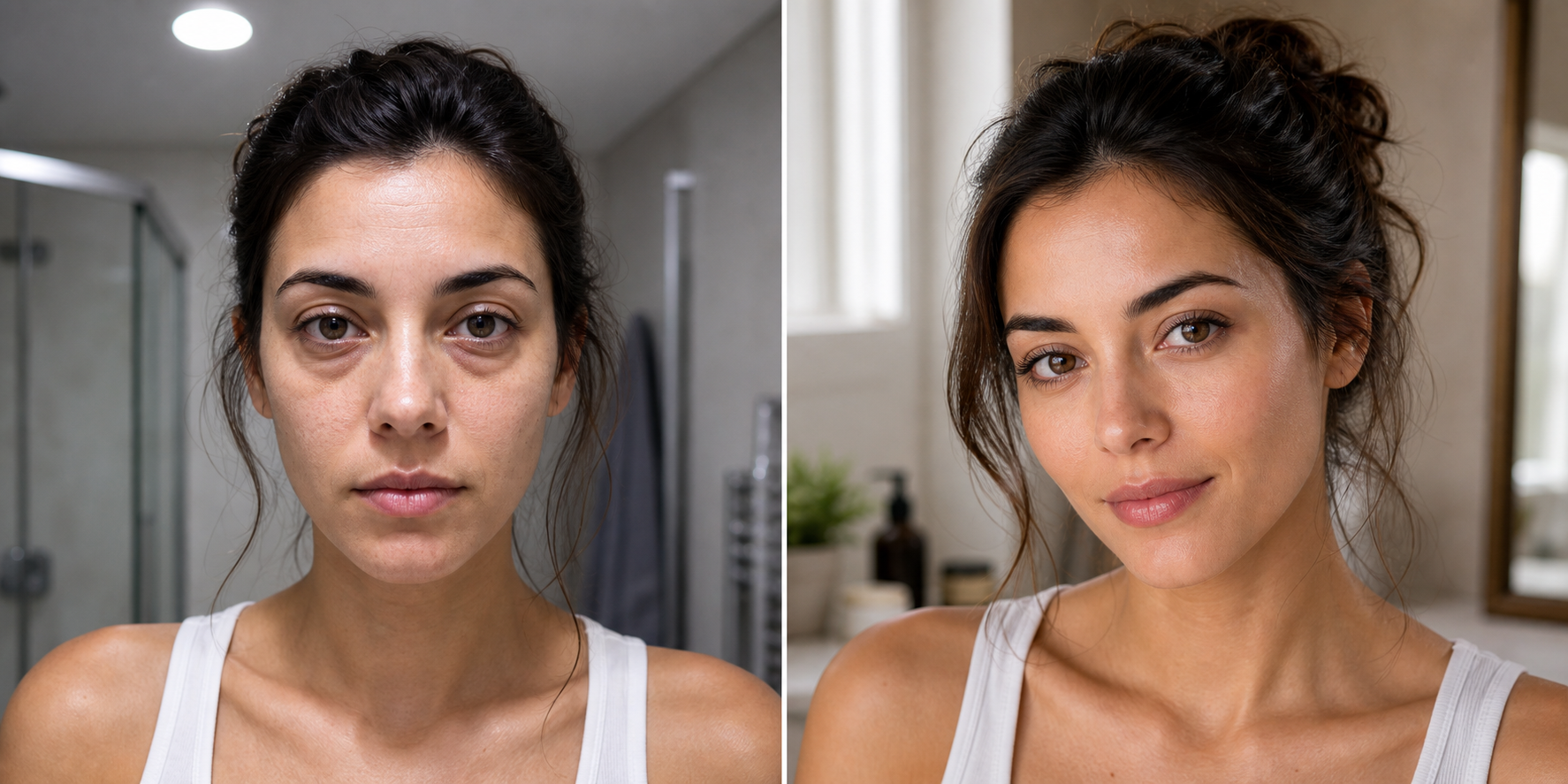
You wake up, look in the mirror, and there they are: the under-eye bags. The annoying part? You might have slept fine. You might be hydrated. You might even be in a great mood.

But your under-eyes are saying: "I have seen things."
The good news is that bags under eyes are extremely common. Most of the time, they are cosmetic rather than dangerous. But they can be caused by different things, which means the best fix depends on what is actually going on.
Cold Helps Fast
A chilled compress can make puffiness look calmer before a selfie.
Salt Shows Up
Water and lower-salt meals can help if morning puffiness is the problem.
Light Is Everything
Soft window light is much kinder to under-eye bags than overhead bathroom lighting.
What Are Bags Under Eyes?
Bags under eyes usually means puffiness or swelling under the lower eyelids. Sometimes it is fluid. Sometimes it is loose skin. Sometimes it is fat shifting forward as the tissues around the eyes weaken with age.
Mayo Clinic explains that under-eye bags can happen when the tissues and muscles supporting the eyelids weaken, allowing skin to sag and fat around the eye to move into the under-eye area. Fluid can also collect below the eyes, making the area look puffy or swollen.
In normal-person language: the under-eye area can get puffy, loose, shadowy, or all of the above. Very rude, but very common.
What Causes Bags Under Eyes?
There is no single villain. It is usually a team effort.
1. Lack of Sleep
Sleep is the obvious suspect. If you stay up too late, your under-eyes may clock in for a dramatic morning shift. Poor sleep can make the skin under the eyes look duller, paler, or more shadowed.
2. Fluid Retention
If your bags are worse in the morning, fluid may be part of the problem. Sleeping flat, eating salty food, or waking after a salty meal can all make puffiness more noticeable.
3. Allergies
Allergies can make the eye area puffy, itchy, irritated, and swollen. If you are rubbing your eyes, that can make things worse.
4. Aging
As skin loses firmness, the under-eye area can start to sag. Fat pads can become more visible, and shadows can appear deeper.
5. Genetics
Some people are simply born with under-eye bags, dark circles, or deeper tear troughs. If your parents have them, you may have inherited the family under-eye luggage.
6. Smoking and Lifestyle Factors
Smoking, stress, alcohol, dehydration, and sleep habits can all affect how the under-eye area looks. Smoking can also contribute to collagen loss and thinner-looking skin around the eyes.
Bags vs Dark Circles: Not the Same Thing
Bags under eyes usually mean puffiness, swelling, sagging, or bulging. Dark circles usually mean darker coloring under the eyes, which can look blue, purple, brown, or black depending on your skin tone.
Cleveland Clinic explains that dark circles can come from aging, genetics, dermatitis, rubbing, lack of sleep, hyperpigmentation, dehydration, and lifestyle factors. Sometimes you have both.
That is when your under-eyes become a full production.
How to Get Rid of Bags Under Eyes
Now for the part everyone actually came for.
1. Try a Cold Compress
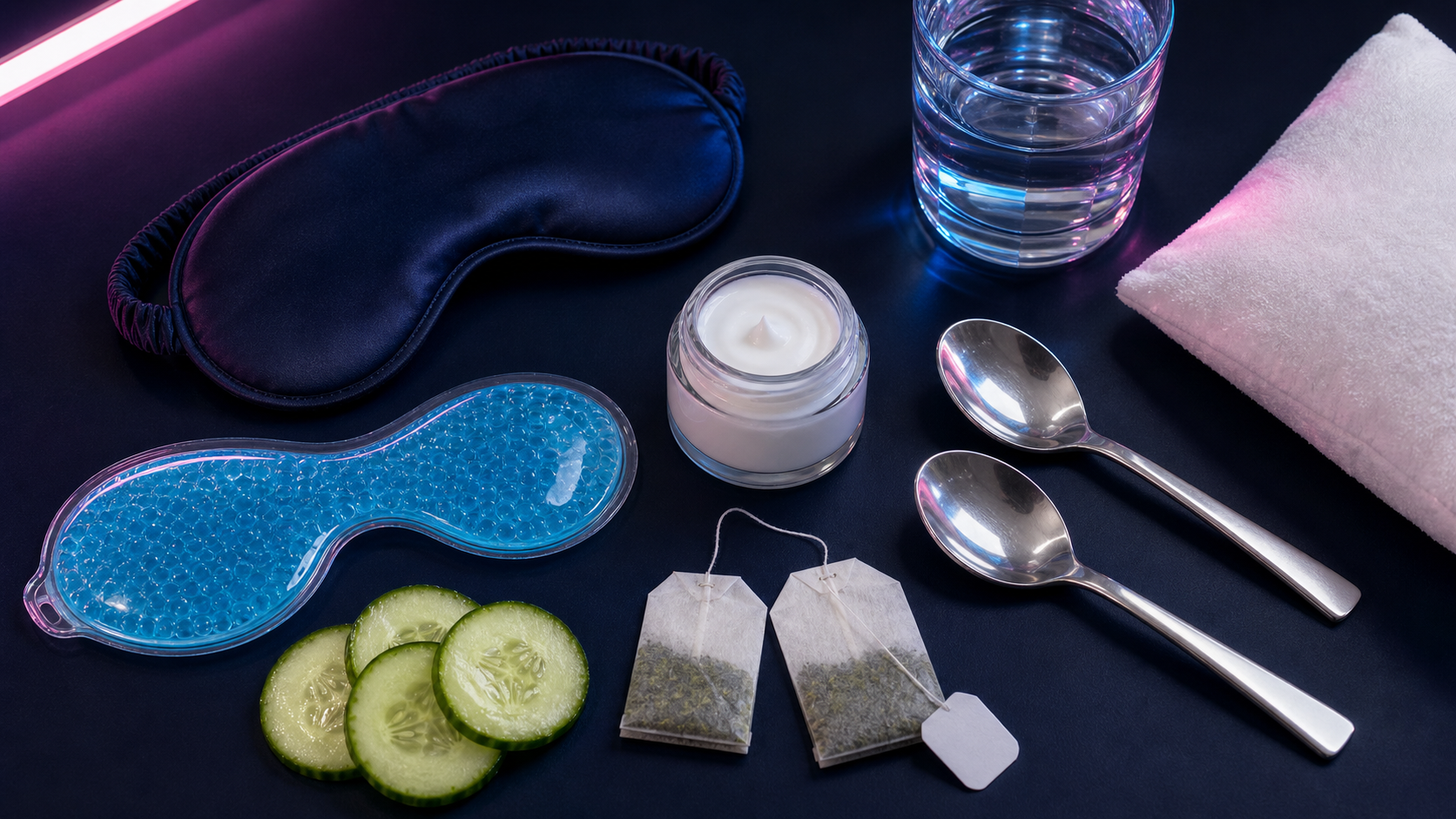
A cool compress can help reduce swelling by constricting blood vessels. Try a cold water-soaked washcloth, chilled tea bags, cucumber slices, cold spoons, or an ice pack wrapped in a towel.
2. Sleep Smarter
If puffiness is worse in the morning, try slightly elevating your head while sleeping. Better sleep also helps tired-looking skin, even if it does not erase structural eye bags.
3. Watch the Salt
Salt can make your body hold onto water, which can show up as puffiness around the eyes. Your under-eyes may not love salty takeaway as much as your taste buds do.
4. Use the Right Eye Cream
Eye creams will not magically delete under-eye bags, but ingredients like caffeine or retinol may help the appearance for some people. Think of eye cream as a supporting actor, not the superhero.
5. Stop Rubbing Your Eyes
Rubbing can irritate the area, worsen swelling, and make dark circles more noticeable. If your eyes are itchy, allergies or irritation may be the real issue.
6. Use Makeup and Lighting Tricks
Soft natural light, a camera slightly above eye level, gentle concealer, color correction, and no harsh overhead bathroom lighting can make a fast difference in photos.
What About Tea Bags and Cucumbers?
They can help temporarily because they are cool and soothing. Tea also contains caffeine, and Cleveland Clinic notes cold tea bags may help with circulation and puffiness.
Will cucumber slices change your life? Probably not. Will they make you feel like a relaxed spa cucumber queen for 10 minutes? Absolutely.
What Not to Put Under Your Eyes
Please do not use hemorrhoid cream under your eyes because the internet told you to.
Cleveland Clinic warns against using hemorrhoid creams around the eyes because ingredients like hydrocortisone or phenylephrine can cause irritation, thinning skin, discoloration, allergic reactions, or eye problems if they get into the eye.
Your eye area is not the place for let us see what happens.
Professional Treatments for Under-Eye Bags
If the bags are caused by genetics, fat pads, loose skin, or deeper tear troughs, home tricks may only do so much. Professional options may include:
Mayo Clinic, Cleveland Clinic, and Johns Hopkins all describe options such as laser resurfacing, chemical peels, fillers, and lower eyelid surgery depending on the cause. This is where a dermatologist, eye doctor, or qualified cosmetic professional matters.
When Should You See a Doctor?
Most under-eye bags are harmless, but get checked if:
Cleveland Clinic says eye swelling that lasts longer than 24 to 48 hours should be evaluated by an eye care professional because some causes can be serious.
Quick Under-Eye Glow-Up Plan
Final Takeaway
Bags under eyes are common, normal, and usually not a big deal.
Sometimes they come from sleep, salt, allergies, or fluid. Sometimes they come from aging, genetics, skin laxity, or facial structure. The best solution depends on the cause.
For quick improvement, cold compresses, better sleep, lower salt, and smart photo lighting can help. For deeper or long-term under-eye bags, professional treatments may be the better option.
You may not look tired. Your under-eyes may just be being dramatic. Your face is still doing fine. Your lighting may just need a promotion.